Off Grid Communications Consulting
Private radio networks for places the internet does not reach.
I design, build and run my own long range radio network: the repeater firmware, the fleet tooling, the telemetry and the gateway that ties it to the internet. If you are planning one for a farm, a property, a work site or a group, I can get you to a design that works the first time. This is desk consulting, meaning surveys, designs, firmware and written recommendations your installer can work from.
What LoRa and Reticulum are
The short version
LoRa is a low power radio technology that sends small amounts of data, such as text messages, sensor readings and location updates, over several kilometres without a cell tower, an internet connection or a licence. A node runs for days on a small battery. It is built for short messages rather than video or web browsing, and moves them reliably where nothing else reaches.
Reticulum is the networking layer that runs on top. It gives every device its own cryptographic identity, encrypts every message end to end and routes traffic across many hops of radio automatically. There is no account, server or company in the middle. Put the two together and you get a private, encrypted messaging and telemetry network you own outright, that keeps working when the power and the internet do not.
Typical uses include messaging between buildings or vehicles on a large property, sensor readings from barns, pumps and gates, check ins from people out of cell range and a quiet fallback channel for when the usual networks are down.
Reticulum is the networking layer that runs on top. It gives every device its own cryptographic identity, encrypts every message end to end and routes traffic across many hops of radio automatically. There is no account, server or company in the middle. Put the two together and you get a private, encrypted messaging and telemetry network you own outright, that keeps working when the power and the internet do not.
Typical uses include messaging between buildings or vehicles on a large property, sensor readings from barns, pumps and gates, check ins from people out of cell range and a quiet fallback channel for when the usual networks are down.
What I have built and run
Practical, every time
Repeater firmware. I maintain my own Reticulum transport repeater firmware for a common LoRa board, featuring unattended multihop relaying with automatic failover between paths, rate limiting and flood protection at the radio edge and a management surface that is serial only, with nothing wireless to attack. It has been tested against hostile traffic and soaked for months on real hardware.
Hardware level fixes. Radio driver changes validated with packet counts and signal measurements on real hardware.
Fleet management. A tool that inventories every node by its hardware identity, provisions and flashes it safely, collects its beacons and raises an alert when a node goes quiet.
Telemetry over LoRa. Nodes report uptime, temperature, battery, airtime, error counters and GPS position over the radio itself. The same beacon carries any sensor a remote site wants read, such as humidity, solar voltage or a door contact. A gateway turns that into dashboards and pages me on a handheld when something needs attention.
Gateway. A hardened gateway that joins the radio network to the internet over an encrypted tunnel, and a site with no connectivity can still reach you. A portable version with its own cellular uplink, stacked VPN, solar charging and staged load shedding keeps the LoRa radio up last when power runs low.
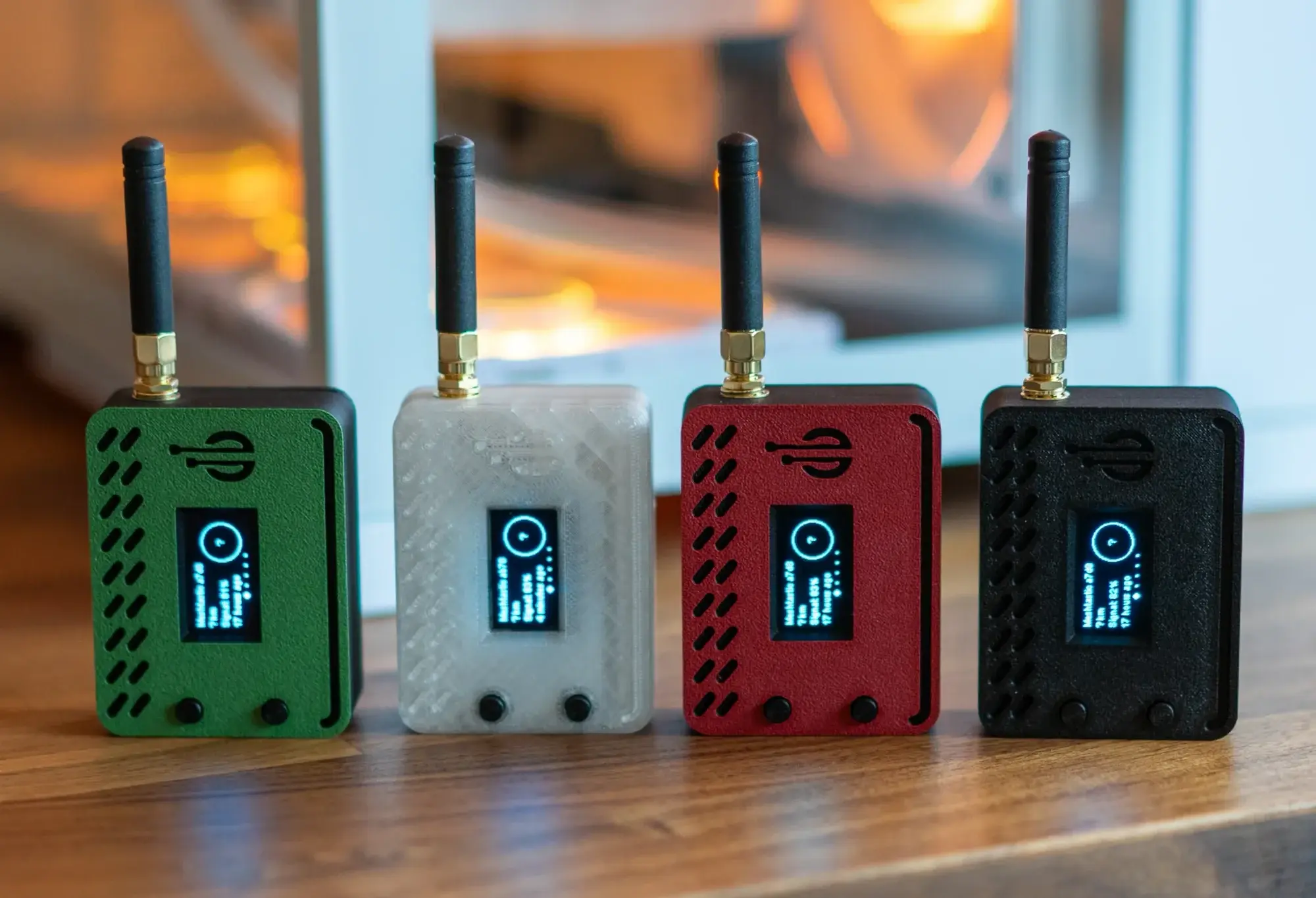
Secure handheld messaging. I build and heavily test custom firmware for pocket LoRa devices such as the T-Deck and T-Pager. They run as standalone messengers, with one to one and group messaging, encrypted end to end, carried over the private radio mesh. There is no SIM card, phone number, cell tower or internet connection in the path, so the usual ways a phone is intercepted, located or attacked do not apply. The same handhelds also work as a radio for a laptop or phone client when you want a bigger screen.
Paging and alerts. The mesh doubles as a private paging network. An alarm, a monitoring system or a one line script sends a page, and the handheld in your pocket beeps. An emergency page overrides the silent setting and keeps sounding until a person acknowledges it, which makes it a dependable alert channel for sites without reliable cell coverage.
Hardware level fixes. Radio driver changes validated with packet counts and signal measurements on real hardware.
Fleet management. A tool that inventories every node by its hardware identity, provisions and flashes it safely, collects its beacons and raises an alert when a node goes quiet.
Telemetry over LoRa. Nodes report uptime, temperature, battery, airtime, error counters and GPS position over the radio itself. The same beacon carries any sensor a remote site wants read, such as humidity, solar voltage or a door contact. A gateway turns that into dashboards and pages me on a handheld when something needs attention.
Gateway. A hardened gateway that joins the radio network to the internet over an encrypted tunnel, and a site with no connectivity can still reach you. A portable version with its own cellular uplink, stacked VPN, solar charging and staged load shedding keeps the LoRa radio up last when power runs low.
Secure handheld messaging. I build and heavily test custom firmware for pocket LoRa devices such as the T-Deck and T-Pager. They run as standalone messengers, with one to one and group messaging, encrypted end to end, carried over the private radio mesh. There is no SIM card, phone number, cell tower or internet connection in the path, so the usual ways a phone is intercepted, located or attacked do not apply. The same handhelds also work as a radio for a laptop or phone client when you want a bigger screen.
Paging and alerts. The mesh doubles as a private paging network. An alarm, a monitoring system or a one line script sends a page, and the handheld in your pocket beeps. An emergency page overrides the silent setting and keeps sounding until a person acknowledges it, which makes it a dependable alert channel for sites without reliable cell coverage.
Consulting services
RF coverage survey
Terrain aware coverage modelling for your sites, antenna and placement recommendations and a written report of what range to expect and why.
Repeater firmware and fleet setup
A reviewed firmware build for your repeater nodes, a provisioning procedure and fleet tooling that tracks each node and alerts when one goes quiet. Telemetry over the radio included.
Node power and enclosure planning
Battery, panel and enclosure sizing for an unattended outdoor node, with a parts list and wiring notes. Sizing is modelled, and the report sets out the assumptions behind it.
Private gateway design
Architecture for a private gateway linking your LoRa nodes to each other, and to the internet if you want it, over an encrypted tunnel, with monitoring built in.
Handheld messaging and paging setup
Custom firmware on pocket LoRa handhelds for encrypted one to one and group messaging over your private mesh, plus a paging bridge so alarms and monitoring alerts reach the person on duty with no cell service needed.
Range figures come after a survey. Off grid networks are not a replacement for emergency services or life safety communications.
Jobs are quoted in writing after a free scope, so you know the number before any work starts.
What you get on paper
- A written survey or design you can hand to an installer
- A parts list and firmware build you can reproduce
- Honest range and reliability expectations
- Monitoring, telemetry and encryption designed in from the start
- Handhelds that message and page over your own radio network, with nothing a phone network can see
Built, tested and on the air
Ask about an off grid design
Describe the sites and what you want the network to do.