A private radio network, from firmware up
This one is my own. I wanted a radio network I could trust when there is no cell service and no internet. Private, encrypted end to end and running on hardware cheap enough to leave outdoors on a hill.
Where it started
The Reticulum LoRa firmware I was interested in needs a computer plugged in to forward anything. There is no way to tell whether a radio on a hill is healthy without walking up to it. And the handheld options are either toys or tied to someone else's servers.
The repeater
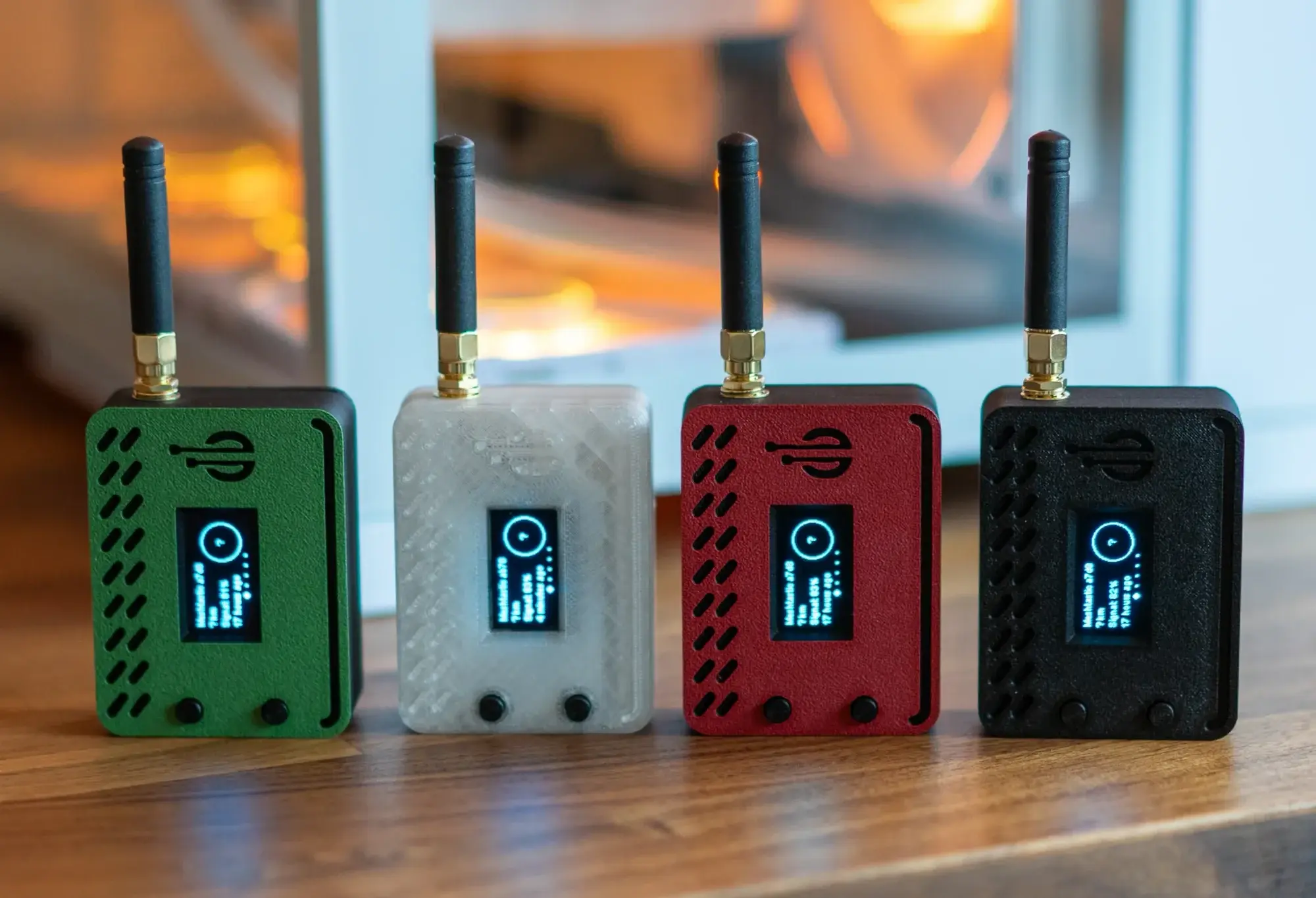
The radio firmware now relays on its own, with no host computer. Each packet it hears is checked for signal strength, hop count and whether it has been seen before, then sent on again with a little random delay so repeaters do not talk over each other. Everything it relays is encrypted end to end, so the repeater itself cannot read what passes through. WiFi, Bluetooth and the web console are compiled out of the build rather than switched off, which leaves a serial cable as the only way in. Rate limits, replay checks and bounded tables mean a flood of bogus traffic gets dropped at the door. It has run for months on real hardware and survived deliberate flood attacks without a reboot.
The fleet and the handhelds
Every board is enrolled by its hardware identity and flashed with a signed image. Each one reports in over the radio with uptime, temperature, battery, airtime and GPS position, and if one goes quiet I get an alert. The same beacon format carries any sensor a remote site might want read, such as air temperature, humidity, solar voltage or a door contact, so a field station can report home over the mesh with no internet anywhere near it. Pocket LoRa devices on the same mesh carry encrypted messaging, group chat and a pager mode, where an emergency page overrides silent mode and rings until someone acknowledges it. A monitoring alert from my servers can arrive as a page in my pocket with no cell network involved.
The travel gateway
The base of the network is a small gateway built on a single board computer that goes wherever I do. It has a cellular modem for backup internet, with every byte forced through a stacked VPN before it leaves the box, a WiFi access point for the laptops and phones around it and the radio hub the mesh hangs off. Its secrets live in an encrypted vault that boots locked. It runs from its own battery pack with a solar charger, watches its own voltage and temperature and sheds load in stages when power runs low, dropping WiFi first and keeping the LoRa radio up last. Handhelds on the mesh can ask it for a weather forecast and get one back over the radio in a few hundred bytes. A small screen and a terminal console show what it is doing at a glance.
The bug I did not work around
The gateway's USB WiFi adapter kept stalling. I rebuilt the adapter's open firmware from source and found where its transmit queue could jam. The hang went from something to live with to a fixed problem in what was essentially abandoned firmware, breathing new life and functionality into inexpensive hardware.
Today
The network runs unattended. Nodes report in, the fleet tool notices when one stops and a page reaches me wherever I am. The same firmware, tools and lessons are what I bring to the off grid consulting service.
Stack
C and C++ firmware on ESP32 class LoRa boards, Reticulum, Python, Linux, WireGuard, Prometheus and Grafana